✅ Network of ADAI WDC-Licensed Operators • 🛡 Bonded & Insured Operators • ⚡ fast-dispatch routing • 🔍 no-obligation inspection routing
Transparent pricing: Operators in the network quote treatment pricing after a no-obligation initial inspection routing request. ADAI-licensed, fully insured operators, with fast-dispatch routing available in most areas.
If you live in Mobile and you only know one species of termite, you probably know the wrong one. The eastern subterranean termite has been the textbook example in Alabama for as long as anyone has been writing textbooks. But for at least three decades, a different and far more destructive insect has been quietly working through Mobile County, Baldwin County, and the rest of the central Gulf Coast: the Formosan subterranean termite, Coptotermes formosanus.
Where it came from, and where it is now
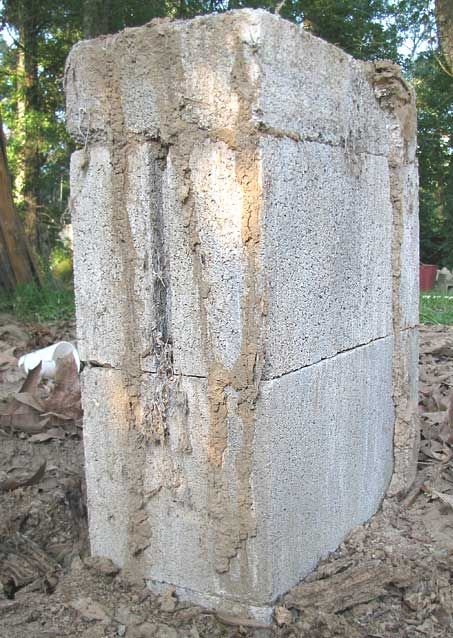
Formosan termite is not native. It arrived in the United States on military cargo returning from the Pacific after World War II and was first recorded in Mobile County in the 1960s. From that beachhead it has moved north and west through the Mobile River corridor and into the western suburbs of West Mobile and Semmes. Auburn University Cooperative Extension surveillance has tracked the species moving roughly one mile per year. For the full identification and treatment reference, see the Formosan termite in Mobile, AL guide.
Why this species is a different problem
A mature native subterranean colony might contain 30,000 to 250,000 workers. A mature Formosan colony contains millions. Formosan colonies build aerial ‘carton nests’ that hold their own moisture, which means they can survive in a second-story wall cavity or attic — without soil contact. That single trait makes traditional soil-perimeter treatments less effective than they would be against a native species. If you’re trying to tell a Formosan swarmer apart from a native eastern subterranean swarmer on sight, our Formosan vs. eastern subterranean termite ID guide covers the soldier, swarmer, and mud-tube differences side by side.
What this means for your house
The wood-destroying-organism inspection — the Alabama Wood Infestation Inspection Report that most Mobile-area lenders ask for — is not a guarantee. It certifies what the inspector could see on the date of inspection. With Formosan termites hiding in aerial cavities, an absent finding is not the same as an absent infestation. See our WDO inspection guide for what that process actually covers, and how a termite letter factors into a real estate closing.
Homeowner insurance generally does not cover termite damage. The protection is preventative: a real, current termite contract with a licensed operator, written for the species that is actually a threat in this region.
Alabama regulates pest control under the Alabama Department of Agriculture and Industries. The license category that authorizes termite work is WDC (Wood-Destroying Organi). A handyman, a general pest-control technician without WDC, and a lawn-care provider are all unlicensed for this work. If you’d rather skip straight to getting matched with a licensed operator, our termite treatment in Mobile, AL guide covers every treatment method in depth, or you can start the request from the Mobile Alabama Exterminators homepage.
How Mobile compares to other Formosan-endemic cities
Formosan termites are established along most of the central and western Gulf Coast, but Mobile sits in a unique position. The Port of Mobile is the eighth-largest US port by tonnage and the documented 1985 entry point for at least one significant Formosan introduction event into the Alabama corridor. Unlike New Orleans, where Formosans have been studied at street-by-street resolution since the 1960s, or Charleston where the species is concentrated in the historic district, the Mobile metro pattern is more diffuse: the species is established in Mobile County, in Baldwin County across the bay, and pushing inland through Semmes and Theodore. The 2003 Fairhope Formosan Watch Program found Formosan activity in roughly 70% of the trap-arrays it sampled in eastern Mobile Bay neighborhoods — a baseline that has not improved in the decades since.
The four-species termite framework in Mobile County
Pest-pressure mapping in coastal Alabama recognizes four termite species that homeowners are realistically going to encounter:
- Eastern subterranean (Reticulitermes flavipes) — the historic textbook species. Colonies of 30,000–250,000 workers. Soil-contact dependent. Responds well to traditional perimeter chemical treatments. See the eastern subterranean termite species guide for full biology and swarm timing.
- Dark southern subterranean (Reticulitermes virginicus) — present throughout central Alabama. Smaller colonies than R. flavipes but identical treatment approach.
- Formosan subterranean (Coptotermes formosanus) — the species this page is about. Colonies in the millions. Builds aerial carton nests. Requires species-specific treatment planning. See the Formosan termite species guide for full biology and distribution notes.
- Drywood (Incisitermes snyderi) — non-subterranean. Lives entirely inside the wood it consumes. Spot fumigation or whole-structure tenting are the treatment options — see drywood termite treatment in Mobile for the specifics.
A WDO inspection report that does not differentiate which of these four species is present is a red flag. The treatment plan for Formosans is meaningfully different than the one for natives, and the cost of getting it wrong is structural.
Treatment approaches that account for Formosan biology
Two product families dominate professional termite work in the Mobile area, and both have a Formosan story:
- Termite baiting systems (Sentricon and similar) — in-ground stations that target the colony as a whole through worker-mediated transfer of a slow-acting insect growth regulator. Effective against Formosans because the bait reaches the queen-producing colony regardless of where the aerial carton nest happens to sit.
- Liquid undetectable termiticides (Termidor / fipronil, Premise / imidacloprid) — applied as a continuous soil-treatment barrier around the foundation. Native subterranean species walking through the treated zone pick up the active ingredient and transfer it through the colony. Against Formosans, the soil-barrier approach is necessary but often not sufficient on its own when aerial nesting is suspected — the barrier may need to be paired with attic or wall-cavity targeted work.
The four-category Alabama Department of Agriculture and Industries (ADAI) licensing framework recognizes WDC (Wood-Destroying Organi) as the category required to bid, sell, and apply termite work in Alabama. ADAI also tracks operator bonding in two tiers; the higher tier is what the larger commercial operators carry. Any operator pitching termite work without a current WDC license is unlicensed for the job — full stop.
What does a properly-written termite contract look like?
A real termite contract on a Mobile-area home should include:
- Species identification — written into the inspection report and the treatment plan.
- Treatment scope — perimeter, slab penetration, foundation void treatment, attic / aerial inspection cadence. For homes in the documented Formosan zones, the contract should explicitly address aerial nesting.
- Annual re-inspection — minimum. Some operators offer quarterly re-inspections for Formosan-zone homes.
- Retreatment vs. repair coverage — a ‘retreat-only’ bond covers re-application if termites return. A ‘repair bond’ covers structural repair as well.
- ADAI license number on the contract — verify it on the ADAI public license-lookup before signing.
Frequently asked questions about Mobile Formosan termites
How can I tell if I have Formosan termites versus native termites?
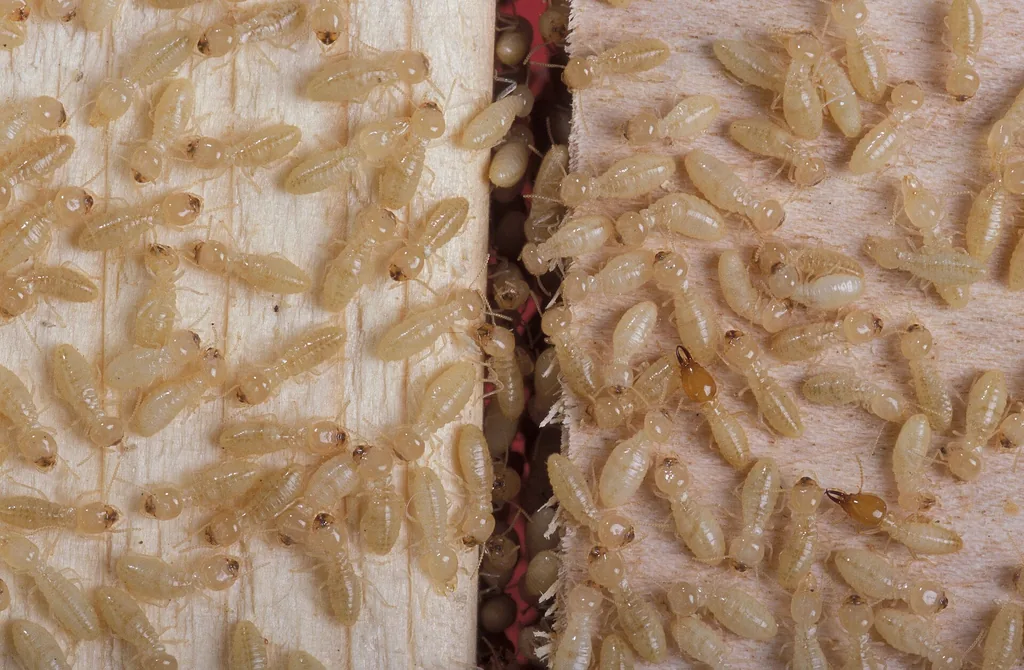
Visually, alates are the most reliable tell — Formosan alates are roughly 12–15 mm long with a yellowish-brown body and translucent wings densely covered in fine hairs. Native R. flavipes alates are smaller, ~10 mm, and have wings with two strong dark veins and no hair. See the full Formosan vs. eastern subterranean ID guide for soldier-caste and mud-tube comparisons as well.
If my home was built in the 1980s or earlier in Mobile, am I at higher risk?
Yes. The Mobile County housing stock skews older than the national average; a substantial share of homes were built before the 2002 IRC pressure-treated framing requirements were widely adopted.
Does homeowners insurance cover Formosan termite damage?
Almost never. Standard homeowners policies in Alabama exclude termite damage as a maintenance issue. Protection is preventative, via a current termite contract with a WDC-licensed operator.
Can a real-estate WDO letter (the Alabama WDIR) catch active Formosans?
It catches what the inspector can see on the day of inspection. Formosan aerial carton nests in wall cavities, attics, and second-story framing are by design hard to spot from the visible inspection.
What does a Formosan-aware initial treatment typically cost in the Mobile area?
Treatment plans in the documented Formosan zones generally include both a soil-barrier and an aerial-inspection component, which costs more than a simple perimeter native-species treatment. Get two written WDC-licensed-operator quotes and compare scope line-by-line, not just total. See the termite treatment cost guide for published Mobile-area ranges.
Get matched with an ADAI-licensed operator in Mobile or Baldwin County
Mobile Alabama Exterminators connects homeowners with a network of ADAI-licensed pest professionals in Mobile and Baldwin Counties.